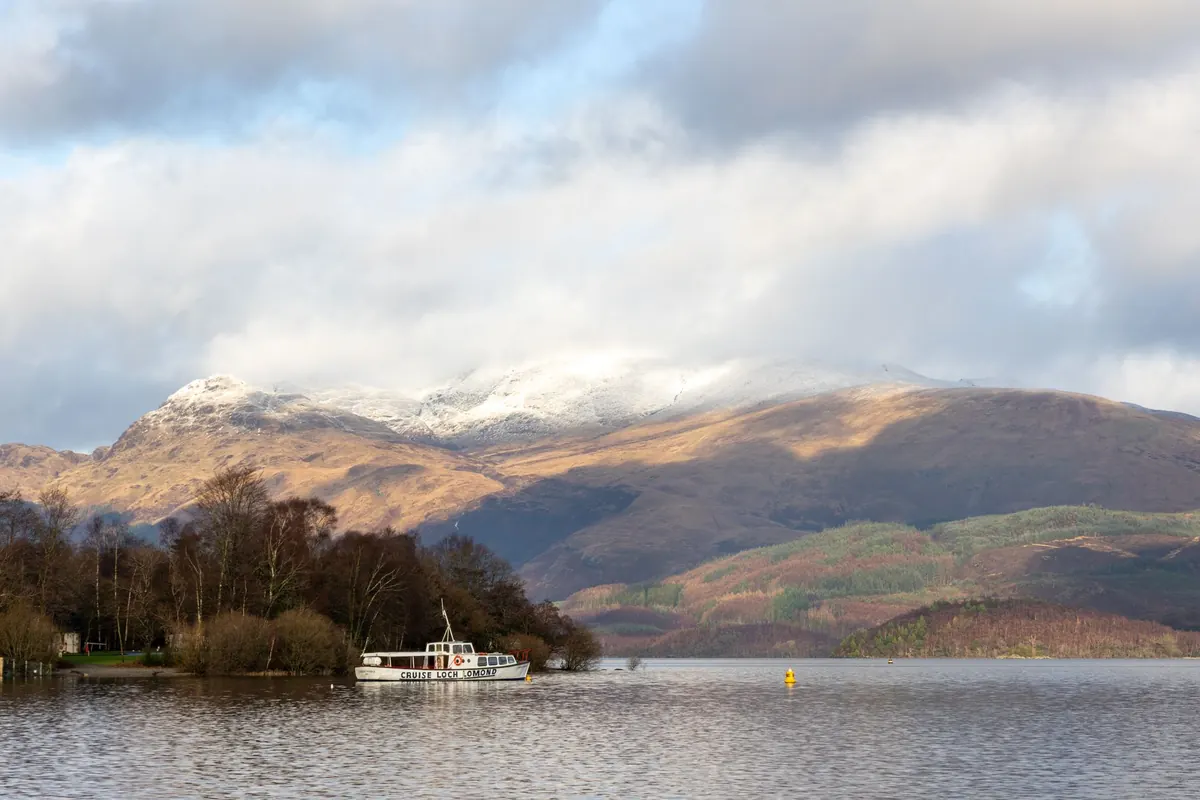
Two of Europe's biggest birds of prey share Scotland's airspace, and both are seen here more often than almost anywhere else in Britain. Golden eagles work the inland ridges and high glens. White-tailed eagles, also called sea eagles, prefer the coast, the long sea lochs and the wooded shorelines behind them. Where those two worlds overlap — Mull, Ardnamurchan, Skye, Wester Ross — a patient morning with binoculars can turn up both species.
Why Scottish lochs are eagle country
Sea lochs feed eagles. Shallow bays hold mackerel, saithe and wrasse, the shoreline offers washed-up carrion, and in winter the flats fill with greylag geese, wigeon and duck. White-tailed eagles nest in old trees or on cliffs within sight of water, and they often show well from a road end or a jetty. They are heavy, slow-flapping birds, more likely to be seen at low level over a headland than high in the sky.
Golden eagles want something different: open, rocky country with crags, long sight lines and a steady supply of mountain hare, grouse and carrion. A ridge above a glen loch is ideal, and a bird on territory is present all year — pair bonds last, and the same crags get used season after season. On a bright day with a light wind, both species climb on thermals and slope lift, which is when they are easiest to pick up.
The west coast: Mull, Ardnamurchan and the Small Isles
Mull remains the surest place in Britain for white-tailed eagles. The coast road along Loch na Keal, the shore of Loch Scridain and the headlands around Calgary Bay all give open views over water. A community-run eagle watch near Loch Scridain runs guided visits in season; booking ahead is sensible, as numbers are limited. Golden eagles also breed on the island, most often over the higher ground inland.
The Ardnamurchan peninsula is quieter and just as rewarding. Loch Sunart's wooded shores hold sea eagles, and the oakwoods near the mouth of the loch are prime habitat. Further out, Rum and Canna support sea eagles, though access and disturbance rules on the islands are worth checking before you travel.
Skye, Wester Ross and the far north
Skye offers both birds in a small area. Golden eagles hunt the Trotternish ridge and the ground below the Cuillin; sea eagles work the coast around Loch Bracadale, Portree Bay and the Sound of Raasay. The road between Sligachan and Portree gives long views without leaving the car park.
In Wester Ross, Loch Maree, Loch Torridon and the Applecross coast are reliable for sea eagles, with golden eagles over the higher ground behind. Push north into Sutherland and the odds stay good: Loch Hope and the surrounding hills, the Assynt lochs and the north coast all hold birds, with far fewer people watching them.
Inland glens and the east coast
For golden eagles alone, the big inland glens are the place. Glen Affric, Glen Strathfarrar, Glen Nevis and Lochaber's hill lochs, plus the Cairngorms, are all classic country — though a bird on a distant ridge is often all you will get without a long walk. The east coast reintroduction means white-tailed eagles now turn up along the Forth, the Tay and the Moray Firth, often as wandering young birds around estuaries and lowland lochs.
Reading the season
Eagle watching has a calendar, and weather matters more than the month.
- Late winter and early spring (roughly February to April) — display time. Sea eagles perform rolling, cartwheeling flights; golden eagles sky-dance over their ridges. The best single period for dramatic views, and the trees are still bare.
- Spring and early summer — birds are tied to nests, so flights are short and purposeful. Watch from a distance and let them get on with it.
- Late summer and autumn — young birds disperse and wander, which puts odd eagles in odd places. Any loch with fish and a quiet shoreline can produce a surprise.
- Winter — fewer visitors and good light on clear, cold days. Eagles soar whenever the sun warms a slope, and shoreline carrion draws sea eagles to predictable stretches of coast.
Time of day counts too. Thermals build from mid-morning and fade by late afternoon, so around midday on a sunny day is peak. In flat, grey or wet weather, expect birds to sit tight, and look low along ridgelines rather than up.
Getting a good look
Optics
An 8x42 or 10x42 binocular is the workhorse; higher magnification is harder to hold steady and rarely helps. A scope on a tripod, somewhere in the 20–60x range, is a real advantage for distant ridges and for nest sites you should not be walking towards. Keep the lenses clean and carry a cloth.
Scanning
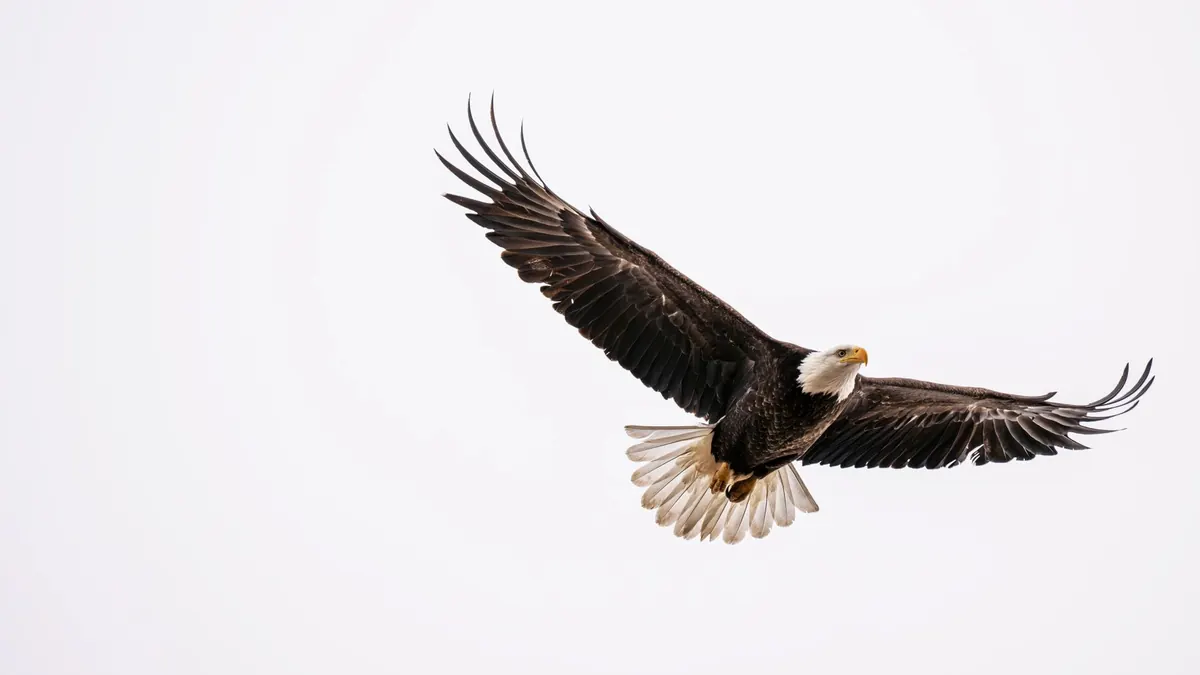
Start with your naked eye, find a landmark, then work the ridge in slow horizontal bands rather than sweeping at random. Shape gives the bird away. A golden eagle soars with wings held in a shallow V, a long tail and a small head. A white-tailed eagle is flat and plank-like
Photo: Frank Cone / Pexels