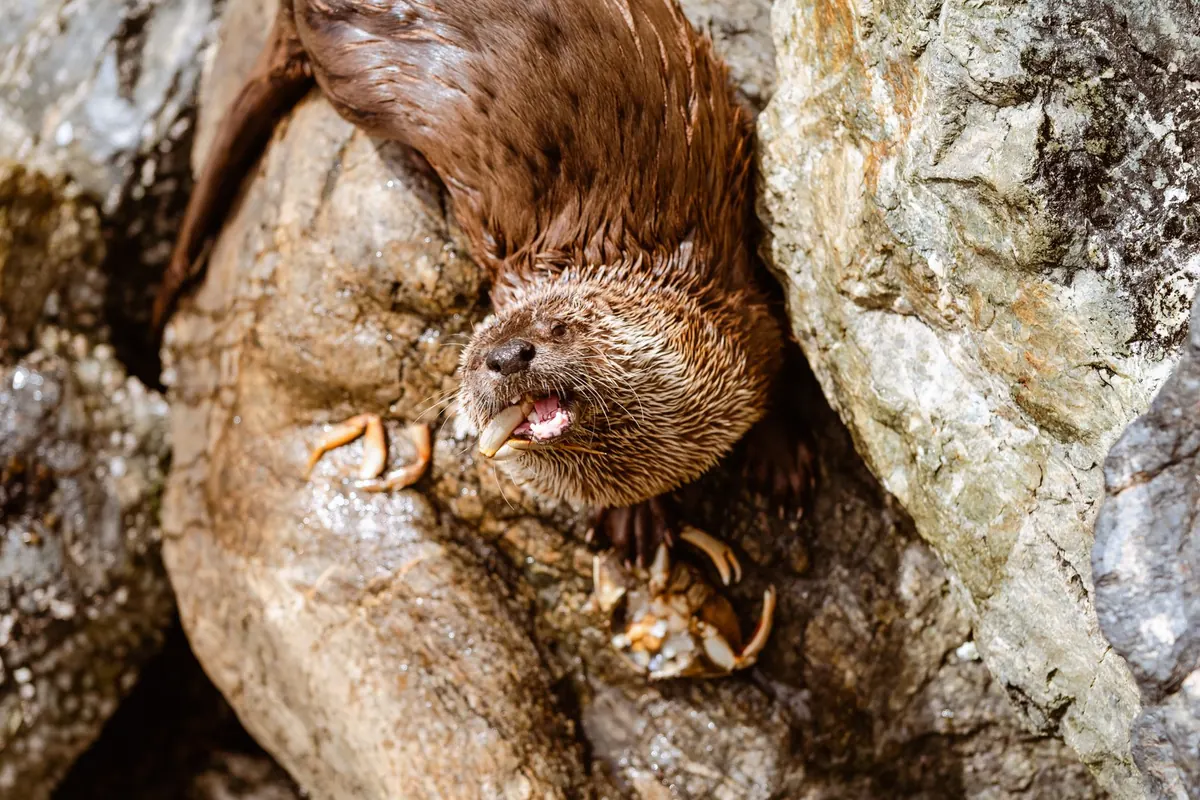
The best wildlife encounters on a Scottish loch rarely happen in a hurry. They come when you find a quiet stretch of shore, settle behind a rock, and let the water and the woodland come to you. A boat helps, but you do not need one. Some of the finest sightings—an otter cracking a crab, an osprey plunging, a stag bellowing across the mist—happen within sight of a lay-by or a footpath. This checklist runs through twelve animals you can reasonably hope to see from the shore, season by season, with the distances that keep them wild and you safe.
Spring: Divers, Ospreys and Early Risers
As ice retreats and days lengthen, lochs wake up. Ospreys return from West Africa, often to the same nest. Watch for them hovering over water, then plunging feet-first. A quiet bank with a clear view of shallow water is ideal. Black-throated divers and red-throated divers come into breeding plumage, their calls carrying across still mornings. Black-throated divers prefer larger, deeper lochs with islands; red-throated divers are more at home on smaller, peaty lochans. Both are easily disturbed by kayaks and paddleboards—give them a wide berth. Check sheltered bays, but keep at least 100 metres from any nesting area. If a diver is calling or swimming away, you are too close. Pine martens become more visible at dusk as they forage along woodland edges near the shore. Look for a slim, chocolate-brown body and a creamy bib—often just a glimpse as it crosses a track.
Summer: Seals, Otters and the Long Light
Grey seals and harbour seals haul out on skerries and rocky points. Harbour seals have a rounded head; grey seals have a longer, flatter snout. Harbour seals, also called common seals, pup in June and July. If you see a white-coated pup on a beach, keep well away—its mother is likely nearby and will abandon it if you linger. Use binoculars from at least 100 metres, and never position yourself between a seal and the water. If seals lift their heads or shuffle toward the sea, back off. Otters are active year-round, but summer’s long daylight gives more chances. Look for spraint on flat rocks, then scan the water at dawn. Otters often use the same spraint sites for years, so a fresh, dark spraint means an active territory. Keep 50 metres away—otters are curious but easily stressed. Ospreys continue fishing, often in the early morning. A quiet bank with a view over shallow water is your best bet.
Autumn: The Rut and the Arrivals
Red deer stags start roaring in late September and October. The rut peaks in the first half of October. From the shore, you might hear them before you see them. Watch from at least 100 metres, and never approach a stag during the rut—they are exhausted and unpredictable. Pink-footed geese arrive from Iceland and Greenland, filling the sky with V-formations and high-pitched calls. Whooper swans return to freshwater lochs, their whooping calls carrying across the water. They can be distinguished from resident mute swans by their yellow-and-black bills and upright necks. Pine martens are still about, caching food for winter. This is a good time to scan stubble fields near the loch for geese, and to check the water for swans arriving at dusk.
Winter: Cold Water Specialists
Great northern divers appear on sea lochs and larger freshwater lochs, often in grey winter plumage. They are powerful swimmers and can stay under for long periods. They are often solitary; you might see just one bird fishing far out, so a telescope helps. Keep 100 metres away, especially if they are resting. White-tailed eagles are most visible in winter when they patrol for carrion and weak prey. Watch from a headland or a high point—300 metres from any nest is a good rule. They often perch in tall trees or on rocky outcrops, so scan the skyline. Whooper swans and pink-footed geese remain, and you may see goldeneye joining them. Cold, still mornings are best.
Respectful Viewing: Distances That Work
Good wildlife watching is about reading behaviour. If an animal changes what it is doing because of you, you are too close. These distances are a practical starting point:
- Seals: 100 metres. Never block their path to the water.
- Otters: 50 metres. Move slowly, keep low, and use a bank or rock as cover.
- Red deer: 100 metres, more during the rut. Use a scope from a road or track.
- Ospreys: 200 metres from a nest, 100 metres from a fishing perch.
- Divers: 100 metres. Leave if they call or swim away.
- White-tailed eagles: 300 metres from a nest. A spotting scope is ideal.
Binoculars or a spotting scope are essential. Wear dull clothing, avoid sudden movements, and keep dogs on a short lead. If you are using a camera, a telephoto lens is better than creeping closer. Stay on paths where they exist, and close gates behind you. Never use drones around wildlife—it is illegal and causes real distress.
The Shore-Side Kit and Mindset
Pack for stillness. A flask, warm layers, waterproofs, and a sit mat will keep you comfortable long enough for something to happen. Arrive early or stay late—dawn and dusk are when most loch wildlife is active. Check tide times for coastal lochs, as seals and otters often feed closer to shore on a rising tide. Take all litter home, including food scraps that can attract gulls and rats. And if you are lucky enough to see an otter or an eagle, resist the urge to tell the world on social media with a precise location—these animals deserve quiet. Remember that a sighting is never guaranteed. The point is to be there, quietly, ready. If you see nothing but the light changing on the water, that is still a good day.
Photo: Vlad Vasnetsov / Pexels